SEO Services
What is Local SEO and Why Does Your Business Need It?
Local SEO helps your business appear on Google when people nearby search for the services you offer, making it easier for local customers to discover and contact you.
Google Business Profile Optimization – Your profile is optimized with accurate business details, photos, and service information.
Google Maps Visibility – Helps your business appear in “near me” searches and Google Maps results.
Consistent Business Information – Your name, address, and phone number stay consistent across the internet to build trust with Google.
Location-Based Keywords – Your website and listings are optimized with keywords related to your city or service area.
Customer Reviews Management – Positive reviews and proper responses improve trust and local ranking.
Location-Based Website Pages – Dedicated pages help your business rank in multiple nearby areas.
In simple terms, Local SEO increases your visibility in your area so nearby customers can easily find and choose your business.
What does On-Page SEO mean for a business website?
On-Page SEO helps search engines clearly understand your website content so your pages can rank higher when people search for topics related to your business.
Keyword Optimization – Important keywords are naturally placed in your content to match what people search for on Google.
Meta Titles & Descriptions – Each page has optimized titles and descriptions that improve visibility and click-through rates.
Proper Heading Structure – Clear headings (H1, H2, H3) organize content so both users and search engines can easily understand the page.
Internal Linking – Relevant pages within the website are connected to guide visitors and improve SEO strength.
Image Optimization – Images are optimized with proper file sizes and ALT text to support search visibility.
High-Quality Content Optimization – Content is structured to answer user queries clearly while matching search intent.
In simple terms, On-Page SEO ensures every page on your website is properly structured and optimized so search engines can rank it higher and users can easily understand it.
What is Off-Page SEO and how does it help your website rank on Google?
Off-Page SEO helps build your website’s credibility and authority on the internet, making search engines trust your business more and rank your website higher in search results.
High-Quality Backlink Building – Links from trusted websites signal to Google that your website is reliable and valuable.
Guest Posting & Content Outreach – Publishing content on relevant websites helps increase visibility and authority for your brand.
Brand Mentions Across the Web – When your business is mentioned on different platforms, it strengthens your online presence and credibility.
Business Directory Listings – Listing your business on trusted directories improves discoverability and strengthens local signals.
Industry Partnerships & Collaborations – Connections with other relevant websites help build natural authority and referral traffic.
Social Signals & Content Sharing – Content shared across social platforms increases reach and supports overall SEO growth.
In simple terms, Off-Page SEO strengthens your website’s reputation across the internet, helping search engines trust your business and rank it higher.
Technical SEO
Technical SEO improves the technical structure of your website so search engines can easily crawl, understand, and properly rank your pages on Google.
Website Speed Optimization – Faster loading pages improve user experience and help search engines rank your website better.
Mobile-Friendly Website – Ensures your website works smoothly on mobile devices, which is essential for modern search rankings.
Proper Website Structure – A clean structure helps search engines crawl and index your pages efficiently.
Secure Website (HTTPS) – Security certificates protect user data and increase trust for both visitors and search engines.
XML Sitemap & Robots.txt Setup – These guide search engines to understand which pages should be crawled and indexed.
Structured Data (Schema Markup) – Helps search engines understand your content better and improves chances of rich search results.
In simple terms, Technical SEO ensures your website runs smoothly, loads fast, and is easy for search engines to understand and rank.
Is SEO Dying or Outdated?
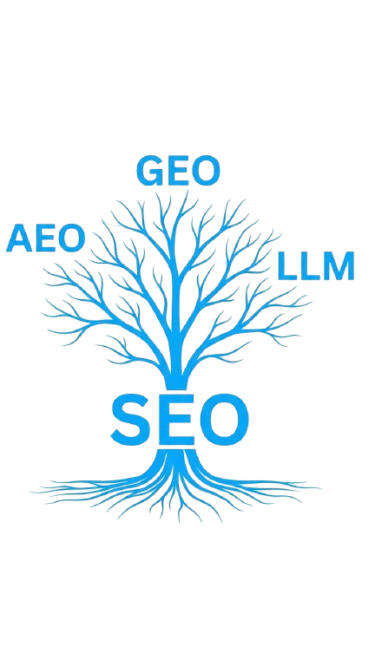
SEO is neither dying nor outdated — it is simply evolving as search technology becomes more AI-driven. As platforms introduce smarter search experiences, SEO has expanded into new approaches that help websites stay visible in modern search environments.
AEO (Answer Engine Optimization)
AEO focuses on structuring content so search engines and AI assistants can deliver quick, clear answers to user questions.
GEO (Generative Engine Optimization)
GEO helps websites become trusted sources that AI systems use when generating answers for users.
LLM Optimization (Large Language Model Optimization)
LLM optimization ensures content is structured in a way that AI models can easily understand and reference.
These approaches are not separate from SEO but evolved forms of it, all still built on the core pillars of On-Page, Off-Page, Technical, and Local SEO.